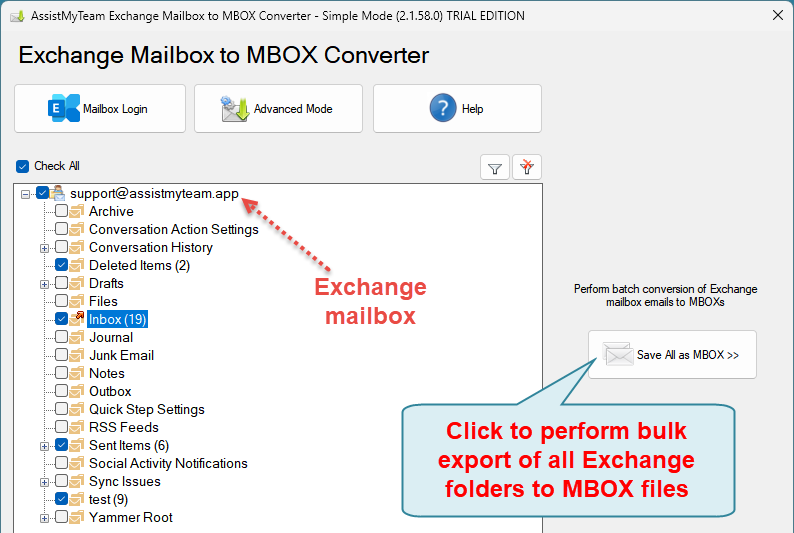
Exchange Mailbox to MBOX Converter can operate in two modes – Simple (default) and Advanced, which has an interactive user interface with many options to export emails and folders to MBOX files.
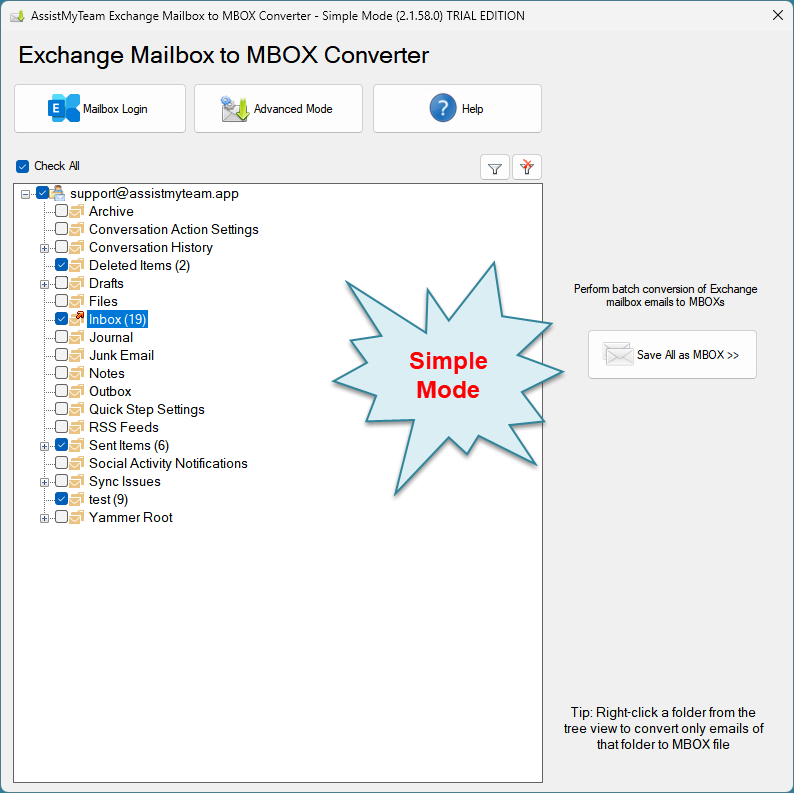
Screenshot: Exchange Mailbox to MBOX Converter – Simple Mode
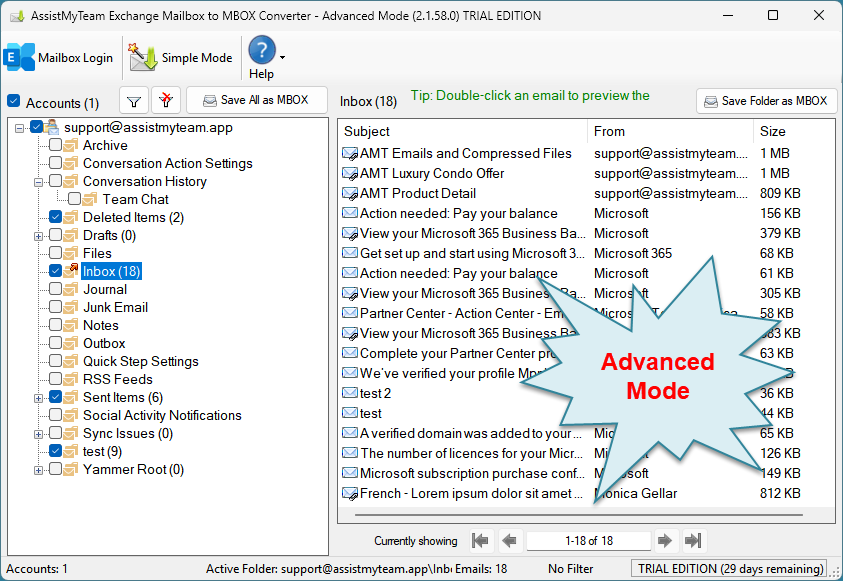
Screenshot: Exchange Mailbox to MBOX Converter – Advanced Mode
There are three ways to perform emails export with Exchange Mailbox to MBOX Converter:
- Export whole Exchange Mailbox to MBOX files
- Export chosen Exchange Folder to new or existing MBOX file
- Export chosen few Emails to existing MBOX file
1. Export whole Exchange Mailbox to MBOX files (bulk export)
In this mode, you can perform bulk export and replication of the all folders and their contents of each exchange mailbox to MBOX files format. Simply, click the ‘Save All as MBOX‘ button.
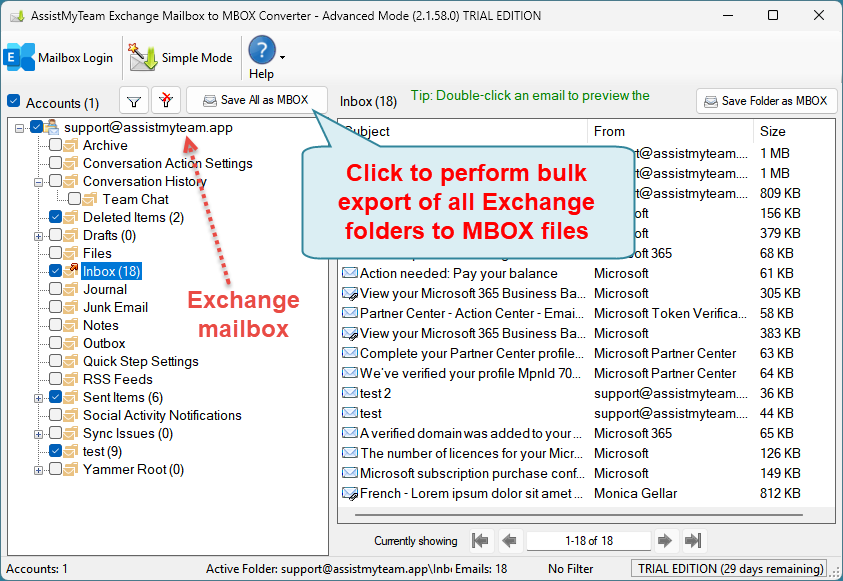
From the ‘Browse for Folder’ dialog box, choose a destination folder where the emails from your Inbox and other folders will be exported as MBOX files.
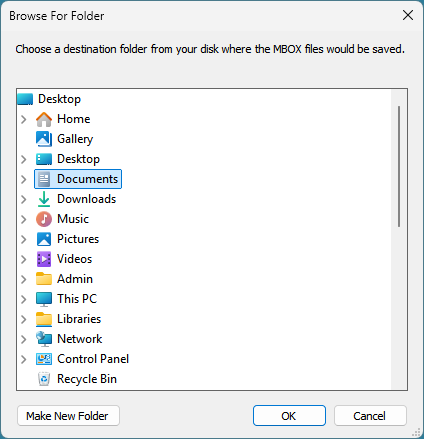
The app will recreate and retain the same original folders structure of your mailboxes in the selected destination folder of your computer to store the various exported MBOX email files for easy access, sharing and filing in your local computer.
Apply keywords search and filters
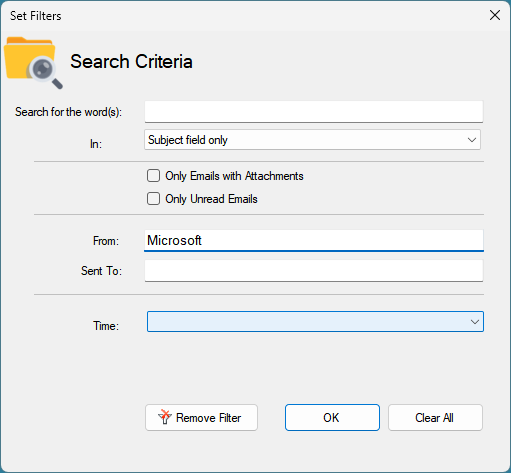
You can choose to perform a keyword search and apply filters and only perform the bulk export of those emails in your mailboxes that fulfill the search parameters to MBOX. To do that, click the ‘Filter‘ button available on top of the tree-view control box.
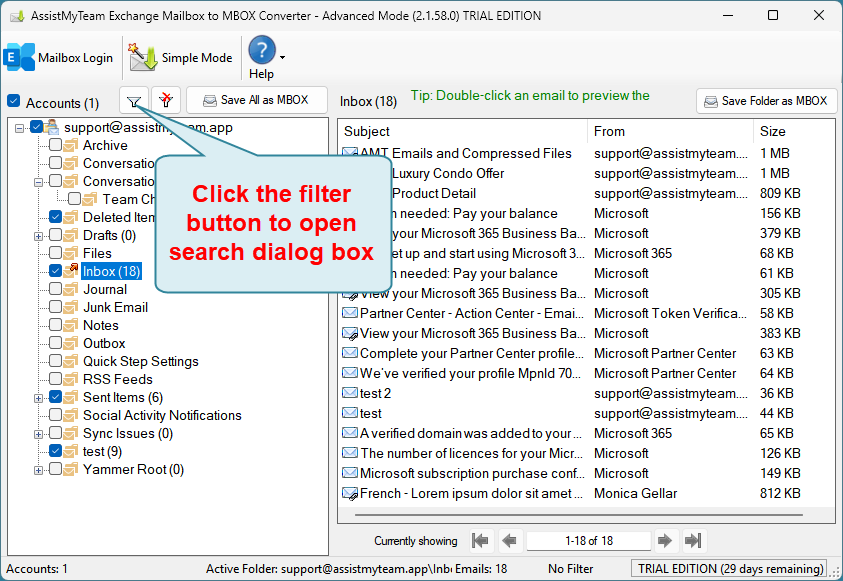
A dialog box for the search pop ups enabling you to input keywords search in the subject or body or both. You can also filter the emails by matching the sender in the From field and/or the recipient in the To field. Additionally, you can specify a time duration to restrict the emails that fall between the start and end date.
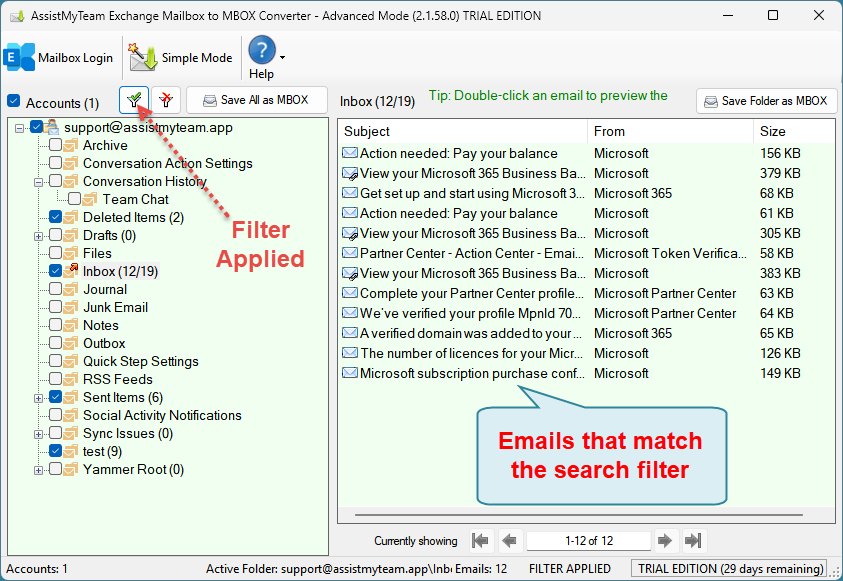
After applying the filters, the filter icon will change with a green tick mark, and the background color of the folder view will also be in green. You will also notice that each folder entry in the tree-view control shows the number of emails that fulfilled the search filter out of the total emails, enclosed within brackets.
2. Export chosen Exchange Folder to MBOX file (multiple export)
At times, what you may need is only to export emails of a particular folder within the Exchange Mailbox to an existing or a new MBOX file.
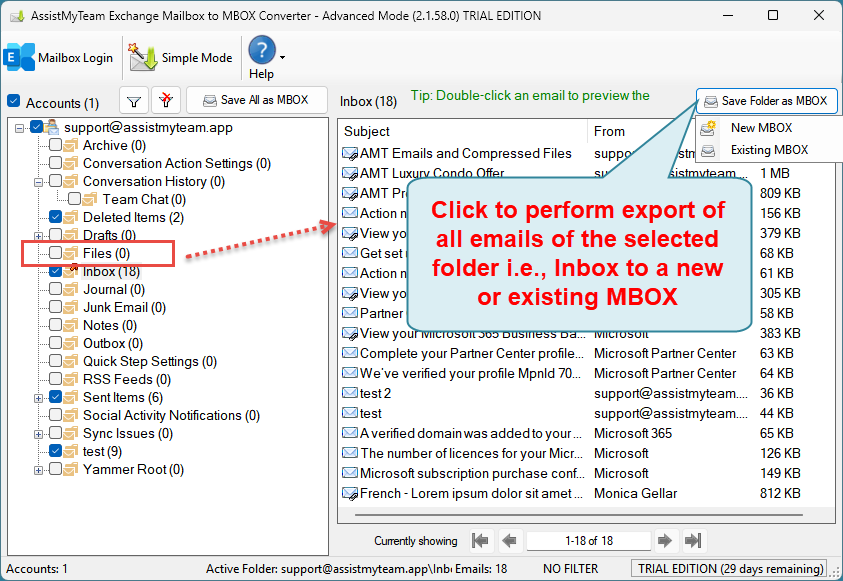
In such needs, you can perform the MBOX export by clicking the particular folder from the folders tree-view control box on the left side. This will show you all the emails in the folder view control on the right side. You can then proceed to click ‘Save Folder as MBOX‘ button located on the extreme right corner of the folder view control.
If you choose to export all the emails of this particular folder to a new MBOX file, the app will prompt you to specify the name of the MBOX file and the destination folder where a new MBOX file will be created.
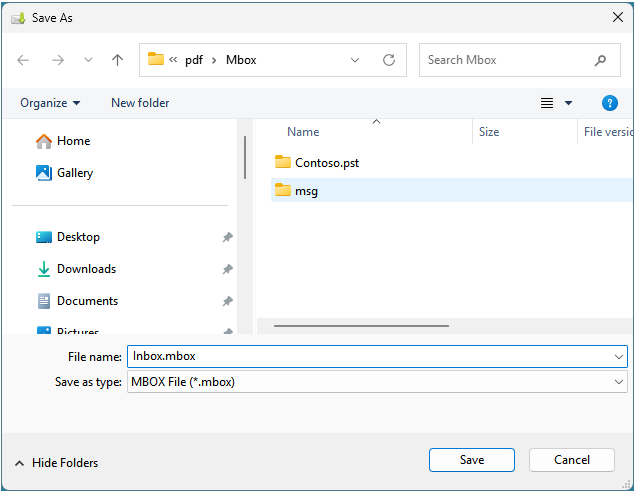
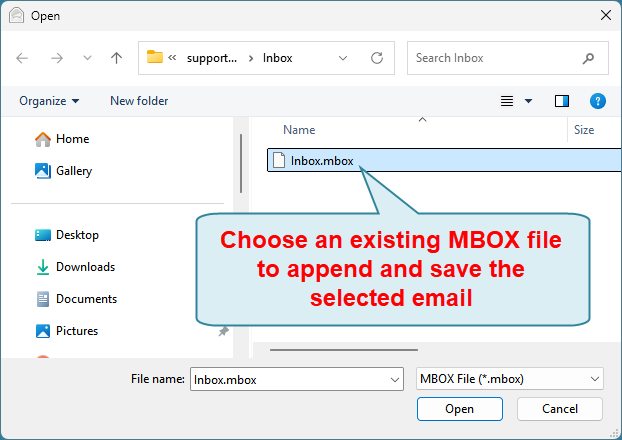
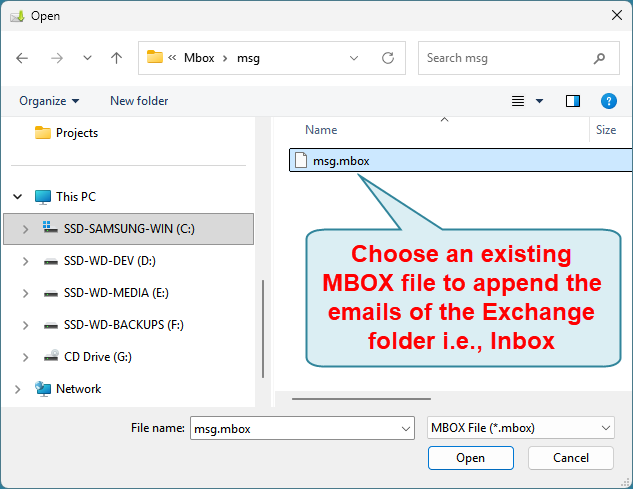
If you choose to export the emails of this particular mailbox folder to an existing MBOX file, you will be prompted to choose it from your computer.
3. Export chosen few Emails to existing MBOX file
In this mode, you can export only those few emails of interest to an existing MBOX file. To do this, select multiple emails of your interest from your Inbox and right-click to show the context menu ‘Save to Existing MBOX’.
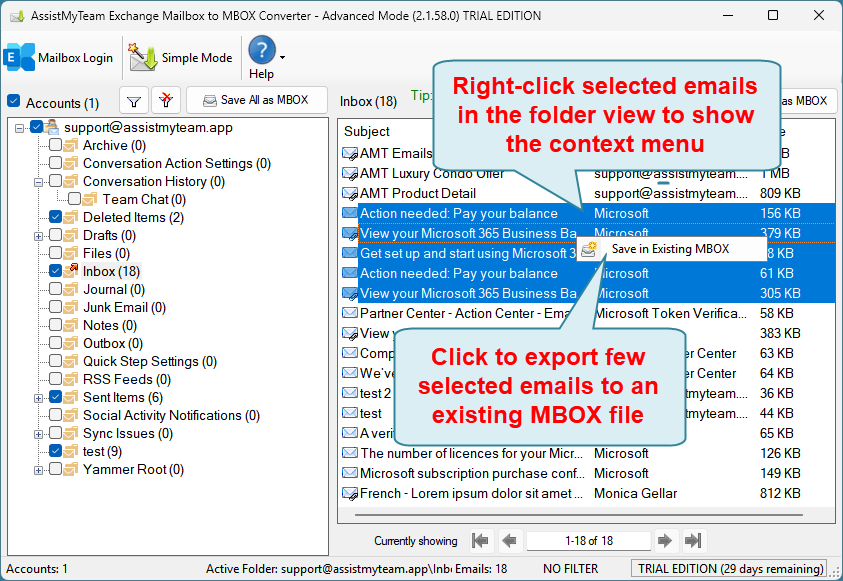
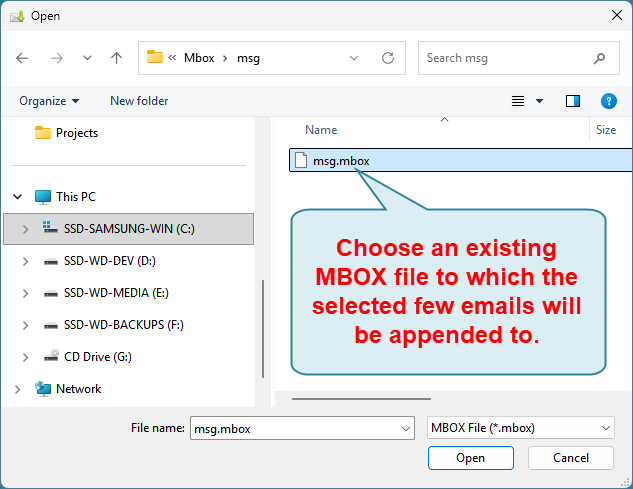
When you click it, you will be prompted to choose an existing MBOX file from your computer, to which the selected emails from your Inbox folder will be appended or exported.
Alternatively, you can preview the full content of a particular email, by double-clicking it from your Inbox folder.
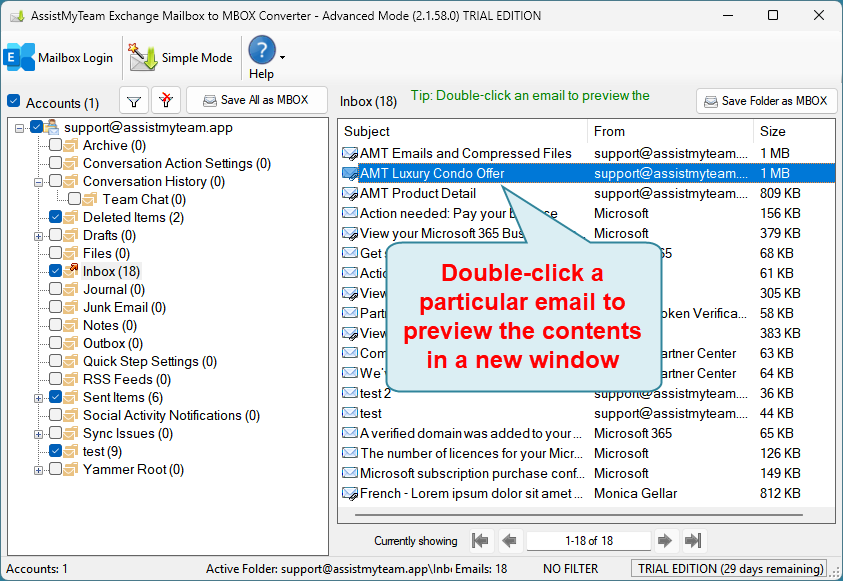
This will show you the contents of the particular email in a new window.
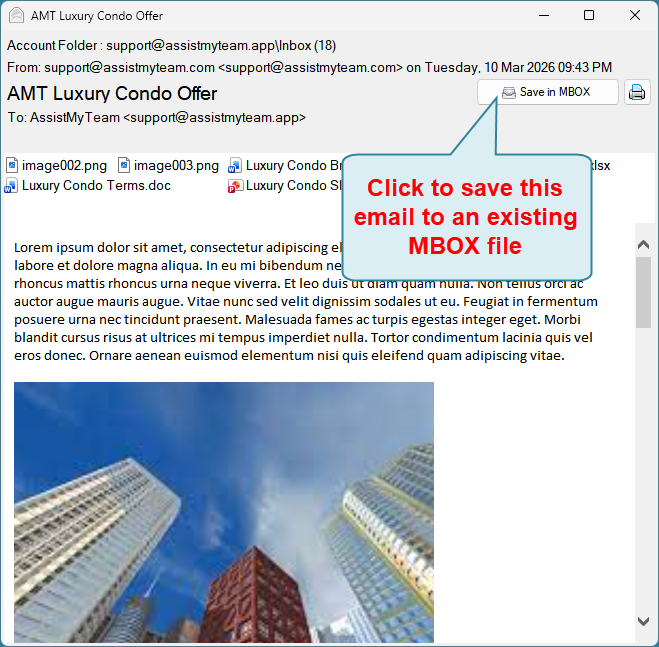
And then choose to save the previewed email to an existing MBOX file by clicking the ‘Save in MBOX‘ button located on the upper right side.